
Ancient and futuristic China meet in the twisted fairy-tale world of Turandot
Giacomo Puccini’s final opera, Turandot, will be performed by Tampere Opera for the first time. Set and costume designer Tinde Lappalainen brings echoes of ancient and futuristic China together on stage. The principal cast includes Oksana Kramareva, Arsen Soghomonyan, Tuuli Takala, Timo Riihonen, Ville Rusanen, and Tuomas Miettola.
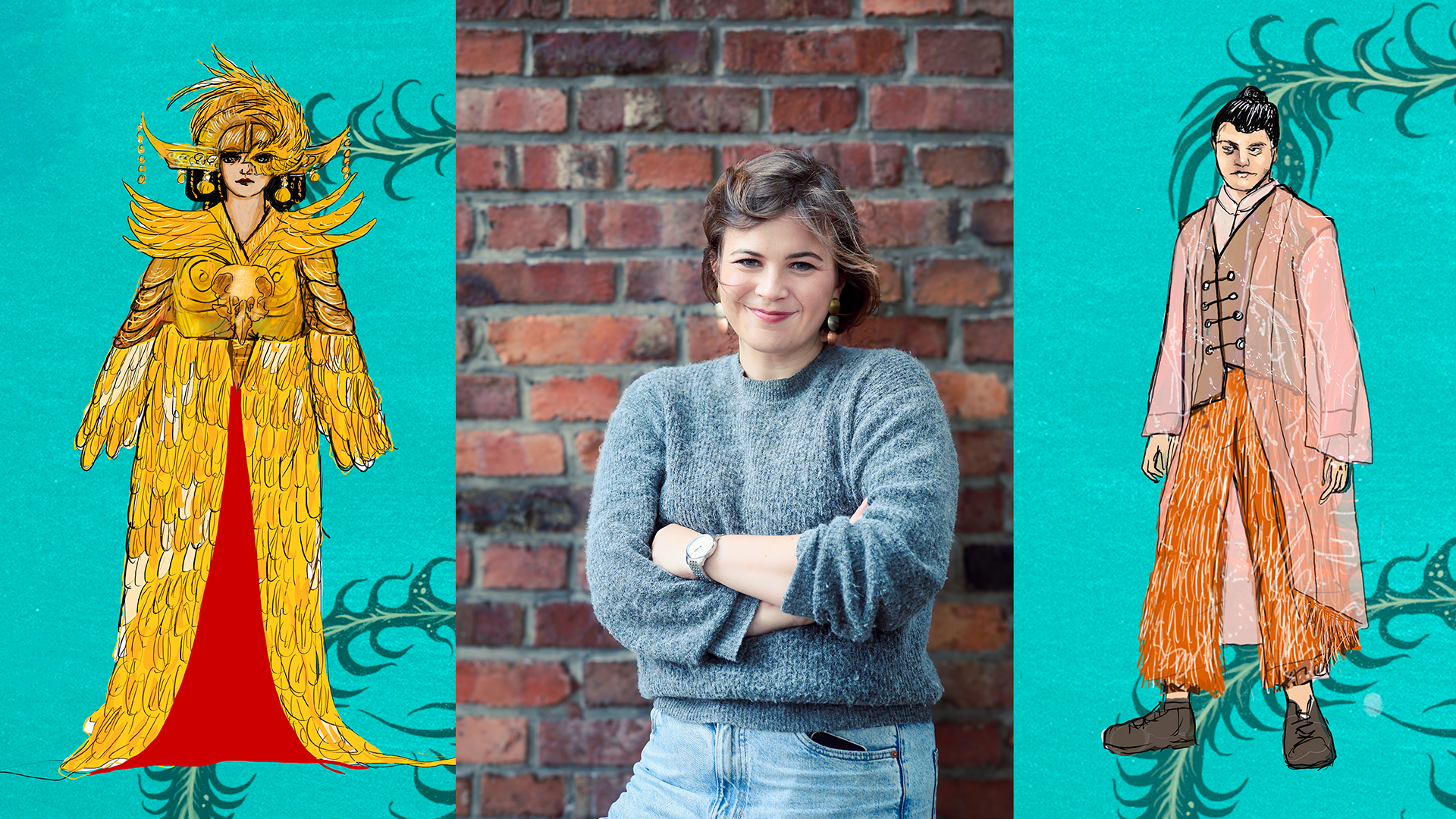
The visual splendour of Tampere Opera’s Turandot is the work of set and costume designer Tinde Lappalainen. In her hands, the fairy-tale Beijing of Puccini’s opera becomes a timeless world where China meets the monumental dystopia of Fritz Lang’s silent film Metropolis (1927).
“Turandot is full of choral scenes, people and action, and the stage is hardly ever empty. We wanted that strangeness to be visible as well. Ancient and futuristic China meet in the opera’s twisted world,” Lappalainen explains.
The world of Turandot is hierarchical: at the top are the cruel Princess Turandot and the Emperor, while the people are below them. This power structure is made physically visible on stage, with American designer Thomas Hase’s lighting and video design complementing the nuances of the set.
“Turandot is raised high above the people. As Calaf answers each of her three riddles correctly, she is gradually brought closer to the ordinary people, while her untouchable status and position begin to falter,” Lappalainen says.
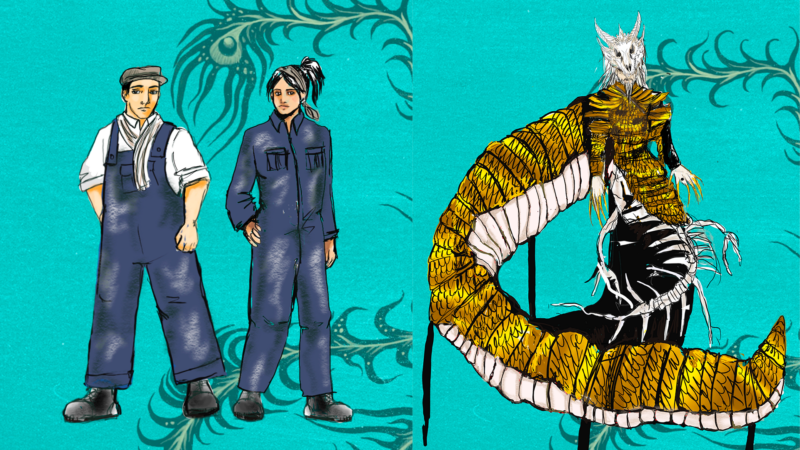
The roles of Ping, Pang, and Pong are also linked to the exercise of power in the production’s visual world. The people are divided into three groups, each with its own minister: the workers are governed by Ping, Minister of Labour; the civil servants by Pang, Minister of Administration; and the soldiers by Pong, Minister of War.
“Ping, Pang, and Pong are not simply three comic characters; they wield real power. Through them, the entire population is organised into three groups. It makes the society of Turandot both highly organised and absurd at the same time,” Lappalainen continues.
Modern hanfu inspires the costumes
For the costume design, Lappalainen has drawn inspiration from the modern hanfu phenomenon that has gained popularity in China in recent years, reinterpreting the forms of traditional Chinese dress in contemporary clothing. Young Chinese people in particular have embraced the style as a way of expressing pride in their cultural heritage.
“We are not trying to make the performers look Asian. China is expressed through the forms, materials and symbols of the production. When staging Turandot, orientalism cannot be entirely avoided; the whole work is built around a Western composer’s fantasy of China. I find it more interesting to acknowledge that and turn it into a world of our own that is openly theatrical,” Lappalainen says.
Colours have carefully considered functions in the costume design. Blue dominates among the people, while gold recurs in the world of power and the elite. Gold is seen in the costumes of Turandot, the Emperor, the Mandarin, the ladies-in-waiting, the executioner, and the children’s chorus. Mythical animals from Chinese imagery also feature in the designs.
“Turandot’s symbol is the phoenix, while the Emperor’s is the dragon. They are powerful, instantly recognisable images, but they also fit the production’s fairy-tale-like and exaggerated world. Not everything has to be realistic. This is a cruel fairy-tale, and it should look like one too,” Lappalainen says.
Grand and powerful music
Turandot combines great emotions, a dramatic story and grand, powerful music, and is particularly famous for the world-renowned tenor aria Nessun dorma. The new Tampere Opera production is directed by Anna Kelo, marking her first guest directing engagement with Tampere Opera.
The music is performed by Tampere Philharmonic, conducted by Italian conductor Pietro Rizzo. Rizzo previously conducted Carmen at Tampere Opera in 2003. The Tampere Opera Chorus is prepared by Heikki Liimola, while Jouni Rissanen prepares the children’s chorus in collaboration with Pirkanpojat.
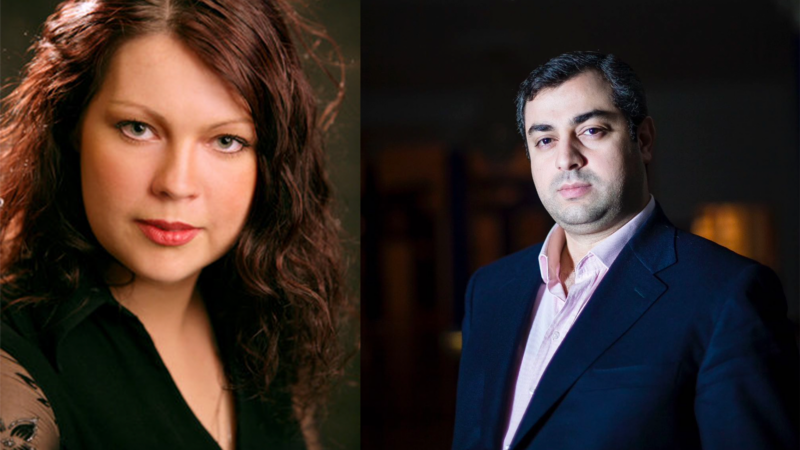
The role of Turandot is sung by Ukrainian star soprano Oksana Kramareva. The award-winning spinto soprano, who has received prizes at several international singing competitions, has been a soloist with the National Opera of Ukraine since 2005. In addition to appearing on major European opera stages, Kramareva has performed in countries including Canada, Japan and Mexico. Turandot is one of her signature roles, and most recently she performed the demanding part at Deutsche Oper am Rhein in Düsseldorf in early 2026.
The role of Calaf is sung by Armenian tenor Arsen Soghomonyan, whose career has taken him to such prestigious institutions as the Vienna State Opera, Bavarian State Opera and Metropolitan Opera, as well as performances as a soloist with the Berlin Philharmonic. In autumn 2025, Soghomonyan appeared as Calaf at London’s Covent Garden, and in spring 2027 he will sing the role at LA Opera in Los Angeles.
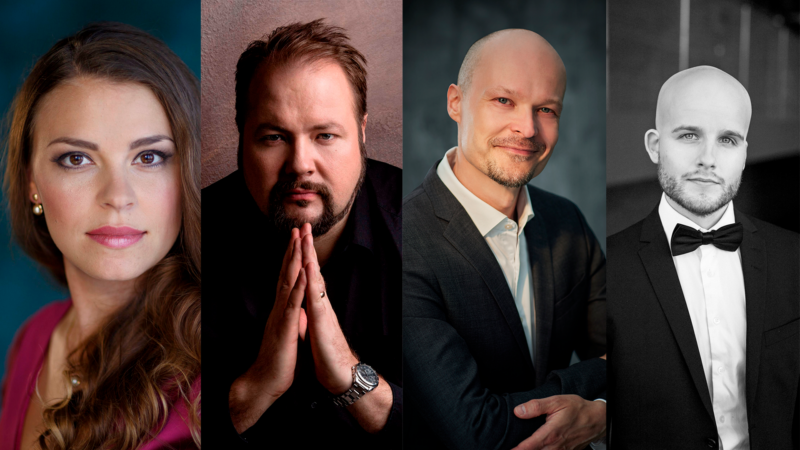
The other principal roles feature some of Finland’s most distinguished opera singers, including soprano Tuuli Takala (Liù), bass Timo Riihonen (Timur), baritone Ville Rusanen (Ping), and tenors Tuomas Miettola (Pang) and Jussi Miilunpalo (Altoum).
Puccini: Turandot
Main Auditorium, Tampere Hall
Sat 27 Feb 2027 at 3 pm (Premiere)
Wed 3 Mar 2027 at 6.30 pm
Sat 6 Mar 2027 at 3 pm
Tue 9 Mar 2027 at 5 pm
Thu 11 Mar 2027 at 6.30 pm
Sat 13 Mar 2027 at 3 pm
Additional information
Suvi Leinonen
Artistic Director
Tampere Hall Ltd & Tampere Opera
Tel. +358 3 243 4031
suvi.leinonen@tampere-talo.fi
Press tickets and interview requests
Elsa Vähänen
Communications Specialist
Tampere Hall Ltd & Tampere Opera
Tel. +358 40 5512 739
elsa.vahanen@tampere-talo.fi
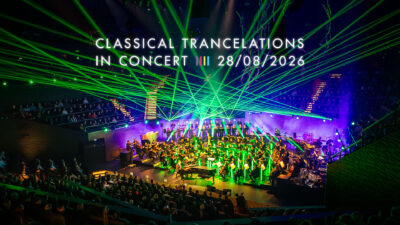
Classical Trancelations in Concert – the masterpiece arrives in Tampere

The Nutcracker and A Christmas Carol meet in the Czech National Ballet’s renewed Christmas ballet for the whole family – Tchaikovsky’s beloved music is performed by the Tampere Philharmonic Orchestra